Why Your Consult Experience Is Your Best Marketing Tool


Patients only retain a fraction of what they hear in a consultation. That gap is where deposits stall, phone calls pile up, and confidence erodes between the consult and the operating room. Closing that gap isn't about talking more — it's about giving patients something they can take home, share with their family, and come back to.
A Nextech user from day one, Dr. Michael McCracken is a board-certified oculoplastic surgeon who uses TouchMD to draw directly on patient photos during consults, assigns pre-op and post-op “homework” — including short videos he records himself — and gives patients a HIPAA-compliant way to keep the conversation going at home with their spouse or partner.
They also get into why photo quality is the real calling card of an aesthetic practice today, how to structure educational videos patients will actually watch, and what consistent consult and post-op systems do for closing rates, phone volume, and patient trust.
Questions answered by this episode:
- How do plastic surgeons use TouchMD during patient consultations?
- How can aesthetic practices reduce repetitive patient phone calls after surgery?
- What is the best way to educate patients before and after a cosmetic procedure?
- How long should patient education videos be for an aesthetic practice?
- Why are before-and-after photos so important for plastic surgery marketing?
- How can I share before-and-after photos without violating HIPAA?
- What is an oculoplastic surgeon?
- How much do patients actually remember from a consultation?
- How can I show a patient what their surgical result will look like?
- What makes a high-quality patient photograph in an aesthetic practice?
Michael S. McCracken, MD, FACS
Oculoplastic Surgeon, McCracken Eye and Face Institute
Dr. Michael McCracken is a board-certified oculoplastic surgeon and Castle Connolly Top Doctor based in the Denver area. With more than 10,000 cosmetic eyelid procedures under his belt, he is widely considered Colorado’s foremost fellowship-trained oculoplastic surgeon.
Dr. McCracken has been in solo practice for 18 years and has been a Nextech user from day one. He also serves as an assistant clinical professor of ophthalmology at the University of Colorado School of Medicine and trains ASOPRS fellows in his operating room.
Connect with Dr. McCracken on LinkedIn
Learn more about McCracken Eye and Face Institute
About Aesthetically Speaking
Aesthetically Speaking is presented by Nextech — the practice management and EHR platform built for aesthetic specialties. Nextech gives practice owners, managers, and their teams the tools to run a modern, efficient aesthetic practice, from patient engagement and marketing to clinical documentation and reporting.
Request a demo at nextech.com/request-demo
Announcer (00:06):
You're listening to The Aesthetically Speaking Podcast, presented by Nextech.
Robin Ntoh (00:13):
Welcome to Nextech's podcast. I'm Robin Ntoh, your host, and today I have the special honor of this esteemed guest, Dr. McCracken. Dr. McCracken, tell our listeners just who you are, what type of practice do you have? I know you're oculoplastic, but let's talk a little bit about where your location is, a little bit about your practice.
Michael McCracken (00:34):
I'm an oculoplastic surgeon in solo practice. I've been in practice for almost 23 years, solo for about 18 of those on Nextech the whole time. My practice is almost entirely cosmetic and I'm based in the suburbs of Denver.
Robin Ntoh (00:48):
You also train physicians, right?
Michael McCracken (00:50):
Yes, yes. So I'm a part of the ASOPRS fellowship at the University of Colorado, so all the trainees going through that program spend time with me in my office and in the operating room.
Robin Ntoh (01:02):
Well, let's dig in. One of the things that I want to really talk about today, because you do it so well, is your consult process. And you've spent a lot of time investing in really refining that piece of the patient journey. You've done a beautiful job of educating your staff, educating yourself, and really making sure that you give that ultimate patient, and you drive an ultimate patient experience by simply investing in a beautiful consult process. So from the first phone call all the way through, you do it very, very well. But specifically
Michael McCracken (01:39):
Thank you.
Robin Ntoh (01:40):
In the consult, you educate your patients in such an eloquent way. You use visual aids. Let's talk a little bit about that.
Michael McCracken (01:49):
Yes. Yes. So we rely heavily on TouchMD for that. When I first got TouchMD, I thought it was going to be a great way just to get the photos directly into the patient chart without wasting staff time on that. Staff got very frustrated doing that after a while, but really, I think to me, the greatest benefit has been being able to show patients things on their photo in real time. And so I think a lot of patients come to us and they're scared and they may think they need one procedure where maybe they need that plus another procedure or something entirely different. And so I think it's a really good way to educate patients. So for example, if someone comes in and says they want an upper blepharoplasty because they have excess eyelid skin, when we examine them, if they actually have browtosis, then we have to get into, well, yes, we can do the blepharoplasty, but in addition, we may need to also lift your brows.
(02:46):
And let me just kind of show you how we do that. I think most patients come in scared and we know they only retain a fraction of what we tell them during the consultation.
Robin Ntoh (02:56):
Absolutely.
Michael McCracken (02:57):
And so I find this a very helpful way to sort of demonstrate where incisions might be placed behind the hairline, different vectors of pull, where fixation devices such as endotynes might be. And so it's very easy to write that out or to draw that out rather on their photo and show it to them. When I was doing insurance-based work, patients might come in with a tiny little what they think is a pimple and it's a skin cancer and we have to explain that that's just the tip of the iceberg. And if you're not very careful with that, they wonder when they leave the operating room, why they have a giant incision all the way across their cheek.
(03:36):
But I think using TouchMD, I'm able to sort of demonstrate, okay, here's the lesion, here's what's going to be cut out. And then in order to close that defect, we're going to make an incision out here and move tissue around. And so I think it's very helpful for the patients not only to see that on their photo in real time, but then of course we save it into their file so that when they log into TouchMD at home, when they go home and their husband has a million questions about what's this brow lift, or they're trying to explain why they have to have an incision on their cheek to fix this tiny little pimple of a thing. I think it's very helpful to help them understand and to help them explain to their family members as well.
Robin Ntoh (04:18):
It's a beautiful crossover into what I love about education is making it consumable at their convenience. And oftentimes we just drop a load of information and we assume that they're going to remember, to your point, they don't remember all of it, but then to go home and share that with their significant other and visually show them, it brings it to life and it explains it in such a beautiful way. And you said it so well. When they can go home and share that with their husband and then that explanation that may have just been another phone call to you, which would have been more time that you had to invest in that, you've now changed that entire continuum of care by changing the way the patient gets to interact with that journey. Now they can actually go home and actually continue that conversation. It's a beautiful way to bridge that experience. What if patients said to you about it? How do they feel about it? Because it's got to be different than what they see in other practices.
Michael McCracken (05:26):
Yeah. I think that it's very helpful for patient education. Some of the other things that I'll do too is I'll use the homework section to put in pre and post-op instructions. You mentioned phone calls. Another thing that I used to get called about all the time was, how do I put ointment in my eye? Do you really mean put it in my eye? And so I had never put ointment in my own eye before, and I did cheat a little bit. I put a numbing drop in my eye, but I actually did a video of myself putting ointment in my eye for the very first time. And I put that in their homework section so that we don't get calls anymore about, Can you please tell me how to put the ointment in my eye? Is it supposed to go in my eye? What is this?
Robin Ntoh (06:05):
I love that.
Michael McCracken (06:05):
So little things like that. Yeah, little things like that are helpful. And so I think that my goal is to improve the patient experience. And I think if you're able to do that, it's great for the patients. And as a side benefit, I think that it's also good for us because I think it helps with our closing rates and I think patients feel more comfortable choosing us.
Robin Ntoh (06:27):
Trust. You're building trust because trust is important in this business. You can't just assume that your credentials are going to do it all. And so you've got to meet them halfway. And I think this level of trust comes from how you've decided that you're not just going to expect everybody to learn the way that you would learn. You want to meet them in the middle. I think that you've done a beautiful job of that. I want to dig into the, where does this interplay with staff? So from your staff's perspective, staff can come and go in a practice. We know that.
Michael McCracken (07:01):
I don't know what you mean.
Robin Ntoh (07:02):
Yeah, right. But then we have to invest in training them, but then sometimes there's an erosion of information and sometimes that erosion of information is translated into education for a patient. And so when you've memorialized that information, that video that you just said cut down on phone calls, well, that also serves as a level of protection for you to some degree because now it's consistent messaging delivered the same way every single time. And now you're not worrying about, okay, did the staff say it right? Did they forget to say something? Did they only give part of the message? And then you have patients calling you and they only have half the information.
Michael McCracken (07:48):
My next project is to go home and do a video on post-op recovery, what to do, when, and probably one on risks too, and to put those in the homework section also. And one nice thing about the homework section is it tells you if they've been accessed or not. So we have documentation when the patients have reviewed these.
Robin Ntoh (08:08):
Love that. I think that's a really good call-out too as well, because again, you want to know that your patients are actually following your instructions and part of the whole surgical journey is they have to do their part. And if they don't do their part, they put themselves at risk and you've got to do your part in giving them the education. So what's your hit list? If you were to say to someone, "What are the top five videos that they should do? " Where do they start?
Michael McCracken (08:36):
Okay. Well, if they're, yeah. If they're oculoplastics, I would say the eye video, putting ointment in your eye. Other ones could be, as I mentioned earlier, post-op recovery, whether you want to break that down by a day one video, a day two video, you could do a pre-op preparation video, what supplements you need to stop. You could do a surgical risks video.
Robin Ntoh (09:02):
Love that.
Michael McCracken (09:04):
So those would be some of the first ones that would come to my mind.
Robin Ntoh (09:07):
Now, where do you think the tolerance is to how long the videos should be? Or is it really more about how much time you have to put into the videos?
Michael McCracken (09:17):
A little bit of both. I find people don't like to listen to me ramble on for too long. So I think probably ideally 30 seconds, maybe a minute would be ideal. You were thinking longer?
Robin Ntoh (09:28):
No, actually I think that's great. I think you hit the nail on the head because if you did a whole surgical journey in one video, then you're expecting someone to sit down for what, 60 minutes and watch that. But if you give them pieces, they can consume it at their convenience in a shorter amount, they could pick and choose what they want to go back and watch and then they can decide, well, today I'm going to watch these two. Tomorrow I'm going to watch these two. Or maybe it's, I watched that video on how to put the drops in my eyes, but I forgot and now I got to go back and watch it. And it's much easier to pull that one out because it's small. It's short.
Michael McCracken (10:02):
Rather than buried in the middle of a long 10 minute video.
Robin Ntoh (10:05):
Exactly. Where they might forget that one critical component. So I think you've done a, that's really well done. Great job.
Michael McCracken (10:12):
Thank you.
Robin Ntoh (10:14):
Let's go back to homework. Do you do that at consult or do you do that at pre-op or is it different homework based upon where they are on the journey?
Michael McCracken (10:25):
Right. Well, I do it at the time of the consult. I tell them, Hey, the photo that we're... Or I may say, I'm about to draw on a photo that you're going to be able to view from home. And then I'll say, I'm also going to give you some things I want you to either look through or watch. And I put in the pre-op instructions, post-op instructions. We can put a surgical consent form in there. Nice. And this video of the ointment in the eye and my next two are going to be the video of the post-op recovery and the risks. So yeah, I mean, and kind of jumping forward to post-op, another way to kind of close the loop is a lot of patients will ask me, "Can you send me my pre and post-op photos?" And I've found TouchMD to be a great tool in a very HIPAA compliant fashion to make a before and after photo.
(11:17):
There's also a great tool to make a video slider with the before on one side and the after. So I find that to be a great way to share patient outcomes with patients without violating HIPAA.
Robin Ntoh (11:29):
I like that you brought in HIPAA because I see that a lot. I still see physicians taking pictures on their phones. No, no, no. I mean, and they think that's okay. Well, we could talk about that for quite a bit of time. We're not going to. However, listen, you're passionate about this. That's the other thing. I hear it in your voice. This is exciting for me to hear that you really have a passion for this. So I'm going to lean on that a little bit more. Where do you see this next in your business? Where do you think you can go to?
Michael McCracken (12:02):
Well, there are some features that we haven't been using in TouchMD. We have a third party that has a video loop that projects to the TVs and all the exam rooms. Nice. And that's kind of a duplication. So I want to change over and just do that with TouchMD and save on that expense. Other things, there are blasts where you can send specials out to patients. And when you're new to TouchMD, you really don't have many patients in your TouchMD system. So as our TouchMD database has expanded, I think it's time that we can start doing things like that. What a lot of patients ask me about and we're not yet able to do, and Robin, I would task you with trying to make this happen, would a lot of patients say, "Can you show me what I would look like after surgery? Can you morph my photo?" And so I'm going to ask you, Robin, to see if you can get that feature.
Robin Ntoh (12:54):
That is an answer that I can say we are close to saying that's future.
Michael McCracken (12:59):
That's exciting. I had no idea you were working on that.
Robin Ntoh (13:01):
I know. See, there's lots of things that you are going to learn today.
Michael McCracken (13:04):
Yes.
Robin Ntoh (13:06):
But if you were to give any advice to a young new surgeon, or maybe if you were to go back and reflect on yourself, and you went down this decision path of, do I want to start incorporating into my consult? It could seem like an additional task. Some surgeons would say, "This is going to slow me down. Why would I want to do this additional drawing?" What would you say to them?
Michael McCracken (13:35):
Yeah. Well, and the first thing I would say to any surgeon starting out is that we used to have these things called business cards, but nobody has business cards anymore. Really, our calling cards are our photos. And our photos are paramount. That's your calling card. I think it's essential to have high quality photos, high resolution, consistency, consistency in angle, consistency in background, consistency in lighting. And that's something that TouchMD has helped with. I have a dedicated photo room. I have a digital SLR incorporated into my TouchMD iPad, but I think photo consistency is key in addition to photo quality.
Robin Ntoh (14:15):
And you have great photos that you do a really good job with them. I've noticed that.
Michael McCracken (14:19):
Well, thank you. But I would say that the time it takes me to draw on the photo I think is actually saved in the amount of questions that patients have during the consult. Where was that going to be again? Can you show me that again? And with phone calls that we get after the fact, patients asking questions, "Can you remind me what I was doing? Why did I need this? Why did I need that? " So I think an ounce of prevention is worth a pound of cure.
Robin Ntoh (14:47):
You talked a lot about the photo system and where it's really been super important and paramount in showing the outcomes. But where does that translate into, as you said, it's your calling card. Where does that translate into marketing? I know some patients are probably very particular about using their photos and in marketing, but I'm certain there's patients that are super excited about their outcome. How have you been able to translate into marketing and where have you seen that be impactful?
Michael McCracken (15:18):
Yeah. And I think you bring up a good point. It's always important to get consent for patients, but some patients may be more willing than others. Sometimes if patients don't want to give a full consent, you can say, "Well, what if we get consent only to put it internally? Or what if we get consent just to show your eyes or various ways to get them to agree to let you use the photos?" But with that said, today's consumer is so savvy and they're bombarded with material all over the internet, whether they're on Google or ChatGPT or on Instagram, they're seeing photos everywhere. And I think that the bar has gone up. And if you're showing poor quality photos, if you have inconsistent backgrounds, if you've got your exam room in the background instead of a nice backdrop, or if you've got different lighting and different angles, I think today's patient is more sophisticated.
(16:15):
And I think that you're going to fall behind in your marketing and in your patient demand if you're not able to demonstrate not only good outcomes, but good quality photographs that show those outcomes.
Robin Ntoh (16:27):
You're absolutely right. Because this is an industry where I've seen really grow up, not giving away my age, but I remember the days when it wasn't digital photography and it was Kodachrome and you basically were taking those images and they were slides, but then usher into this space, the digital photography, and then we had to improve that component to get the good quality. And so quality is the key word here, and there should be great quality in your photos because the equipment is there. The software is there to help you, and so many practices don't really think about that. Now, do you consider this to be just as paramount when you think about non-surgical?
Michael McCracken (17:19):
Yes, I think so. And just as we all know that wrinkles and lines and contours are better demonstrated without a flash and that the flash can conceal a lot of these things. And I used to have an old timer oculoplastic surgeon that I spent a short amount of time with in my training, in my fellowship. And he told me that he would, in his before pictures, he had this tiny little digital camera, not a digital SLR, and he would put his hand over the flash to make it dark in the pre-ops. And then he would allow the flash to go off for the post-ops and say, look how much better this is. But just as surgical patients have become more sophisticated, I think that the injectable patients are just as sophisticated. There's so many options out there today that I think that if you want to demonstrate good quality results, you need consistent photos. Otherwise, the savvy consumer or the savvy patient will look elsewhere.
Robin Ntoh (18:16):
Oh, absolutely. I think you said it so well. They will look elsewhere because they're in tune to it and they want authentic. They want to see the real pictures. And let's go back to the beginning, trust. And you're working to build trust, which feeds back into your reputation, which a savvy consumer is looking for. They want to trust you and you're doing so many of the other things to build that trust just in that consult process and showing them those images, it has to be represented well in your photos. It's so true. So true.
Michael McCracken (18:51):
Yeah. There's a device company out there that has a non-surgical neck tightening device. And when you see their pre-op photos like this and their post-procedure photos like this, it really makes you wonder about the effectiveness of this device that they're trying to pawn off on you.
Robin Ntoh (19:07):
Yeah. And we're going to end it there because I think that's the best thing you could say. Great advice.
Michael McCracken (19:13):
Well, thank you so much, Robin. It's been a pleasure.
Robin Ntoh (19:16):
Thank you.
Announcer (19:18):
Thanks for listening to Aesthetically Speaking, the podcast where beauty meets business, presented by Nextech. Follow and subscribe on Apple, Spotify, YouTube, or wherever you like to listen to podcasts. Links to the resources mentioned on this podcast are available in your show notes. For more information about Nextech, visit nextech.com or to learn more about TouchMD, go to touchmd.com. Aesthetically Speaking is a production of The Axis, T-H-E-A-X-I-S.io.
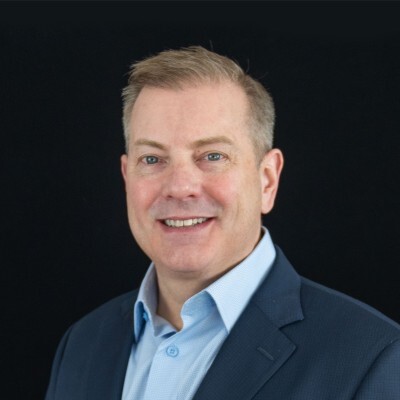
Dr. Michael McCracken is a board-certified oculoplastic surgeon and Castle Connolly Top Doctor based in the Denver area. With more than 10,000 cosmetic eyelid procedures under his belt, he is widely considered Colorado’s foremost fellowship-trained oculoplastic surgeon.
Dr. McCracken has been in solo practice for 18 years and has been a Nextech user from day one. He also serves as an assistant clinical professor of ophthalmology at the University of Colorado School of Medicine and trains ASOPRS fellows in his operating room.