How Most Practice Managers Get Reporting Completely Wrong



Weekly and monthly reports determine what’s profitable, what’s not, and where your practice should grow or cut back.
Stephanie Peterson and Anna Browning share why every decision, from staffing to services, should be driven by data, not gut instinct.
They discuss how tracking true costs can reveal surprising insights, like which procedures are actually making money and which ones just look busy on the schedule.
One key takeaway: “garbage in, garbage out.” If your data isn’t accurate, your decisions won’t be either.
Plus, hear why staff engagement isn’t one-and-done; it’s ongoing and built through consistent training, check-ins, and trust.
GUEST
Steffanie Peterson
Practice Manager, Dr. Matthew White Facial Aesthetic Surgery
For more than 20 years, Steffanie has worked with physician, office and surgical center staff to improve efficiency, practice profitability, staff retention and patient care. She specializes in helping practices find ways through both day-to-day operations as well as long-term strategic planning to maximize revenue without compromising patient care or satisfaction.
Learn more about New York City facial plastic surgeon Dr. Matthew White
Host
Anna Browning
VP of Aesthetic Sales - Nextech
Questions answered by this episode:
- How do you keep staff engaged and feeling valued in a medical practice?
- What does onboarding and training look like for new hires?
- How do you handle an employee who's struggling or not catching on?
- What data should practice managers be looking at — and how often?
- Which reports should a practice live and die by?
- How do you use data to decide whether a procedure is actually worth offering?
- What are the biggest payment processing challenges aesthetic practices face?
- Where does AI fit into the future of practice management?
- How do you use data to plan a physical office expansion?
Presented by Nextech, Aesthetically Speaking delves into the world of aesthetic practices, where art meets science, and innovation transforms beauty.
With our team of experts we bring you unparalleled insights gained from years of collaborating with thousands of practices ranging from plastic surgery and dermatology to medical spas. Whether you're a seasoned professional or a budding entrepreneur, this podcast is tailored for you.
Each episode is a deep dive into the trends, challenges, and triumphs that shape the aesthetic landscape. We'll explore the latest advancements in technology, share success stories, and provide invaluable perspectives that empower you to make informed decisions.
Expect candid conversations with industry leaders, trailblazers and visionaries who are redefining the standards of excellence. From innovative treatments to business strategies, we cover it all.
Our mission is to be your go-to resource for staying ahead in this ever-evolving field. So if you're passionate about aesthetics, eager to stay ahead of the curve and determined to elevate your practice, subscribe to the Aesthetically Speaking podcast.
Let's embark on this transformative journey together where beauty meets business.
About Nextech
Industry-leading software for dermatology, medical spas, ophthalmology, orthopedics, and plastic surgery at https://www.nextech.com/
Follow Nextech on Instagram @nextechglow
Aesthetically Speaking is a production of The Axis: theaxis.io
Theme music: I've Had Enough, Snake City
Announcer (00:06):
You're listening to the Aesthetically Speaking Podcast, presented by Nextech.
Anna Browning (00:13):
Hello everybody. Welcome to our live session at EDGE, our annual user group conference. I'm Anna Browning, Vice President of Aesthetic Sales, here with Steffanie Peterson. And I would like for you to just introduce yourself and tell us a little bit more about you and your role.
Steffanie Peterson (00:28):
Of course. Thank you so much for having me. I am a medical practice manager for a facial aesthetic surgeon in New York City. We're in the heart of Manhattan and we do mostly facelifts. I've been with him for about 11 years now. I've been in the business for almost 30. So hanging out in my wheelhouse for a long time.
Anna Browning (00:48):
And he is lucky to have you. All right, so we're going to kick it off and I want to ask you just some tips and tricks. We've heard a lot this week. It was a big topic in our consulting summit. I feel like it's coming up in lunch, just sitting around with other practices about staff, engaging staff. Any tips and tricks to engaging, retaining staff within your practice?
Steffanie Peterson (01:11):
I think it's the hot button for everybody, and I think it's always going to be a hot button. It's not something that you just ... I don't think you ever arrive with staff. And I think that we get to a place as managers. We think if I just get the perfect staff in place, then I'll be good. I don't think we ever get there. I think it's an ongoing effort you have to put in. I think you have to engage your staff on a regular basis. I think they have to feel included. I think they have to feel like they're part of the program. They're part of the vision. They're part of the mission of the practice. I think they have to feel value. I think they have to know that what they contribute on a daily basis is important. We can't be in every single conversation.
(01:47):
We can't be in every single room. We're not on every single phone call that comes in. And so they have to feel trusted. They have to know that you believe that they have the best interest of the practice at heart. And I think as managers, we instill that through conversations, through good performance reviews, through just chatting here and there, check-ins, one-on-ones, making sure that they understand that we know that while the surgeon is the one at the end of the day or the provider is the one providing the treatment, they really are the heartbeat behind those treatments. Those treatments don't happen if you don't have a staff to set you up with great patients.
Anna Browning (02:21):
How do you handle training your staff? What does that look like?
Steffanie Peterson (02:25):
So it's different for every position that we do. I always spend a lot of time with new staff one-on-one, usually a couple of days kind of going through, this is our structure. These are the kind of patients we see. I find that bringing somebody into a new office is more than just saying, "This is your job and these are your tasks." They need to understand your customer really. It's just like any other industry. They have to know who they're serving. They have to know what is this person's tendencies? What are their personalities like? Why are they coming to us versus somebody else? What's the selling differential that we have? And so I spend a lot of time before I even get to the, "Hey, here's your computer and your key and your password and your email." Talking about our patients, talking about our service offerings, talking about what's like to work in our office.
(03:11):
What do we expect from you on a daily basis? What do you wear to work every day? What time do I want you to come? What time do I want you to leave? Those little things are really important. And so we try to spend time with our staff on the front end of that before we even dive into training. Each of my positions have a different training plan. Sometimes they're buddied up with someone who does a similar job. A lot of my jobs are singular. I'm a relatively small practice. And so in those situations, we have a pretty decent guided training plan that I update each time we bring a new person on board that is very specific to their job. I do 30, 60, 90 day check-ins with each one of them. And I feel like at 90 days they should be flying pretty well on their own.
(03:48):
But until I get to that point, I make sure that training is a continually day-to-day thing. It's not a, "Here's how you do the job. See you later. Good luck."
Anna Browning (03:56):
If you have someone in the practice that is struggling or just not getting it, how do you handle that? Are you leaning in with them? Do you lean on others within the practice?
Steffanie Peterson (04:05):
I'm always going to lean in on them as the administrator and the leader to say, "Hey, where can I help? Where can we give you more of what you need to get you from point A to point B?" Because if somebody's missing out, if they're not doing something, it's not usually ... People don't show up to work to not want to be there or to Slack. People don't take jobs to be like, "Oh, I'm going to be the lowest common denominator in the office today because that's just the job I want. " Nobody really wants that. And so if someone's floundering, they're floundering for a reason. They're floundering because they're missing something. They haven't, they're not comfortable with what they're doing. They don't feel confident that they understand it. Maybe they don't know the system. There's always a disconnect somewhere. So I try to lean in and figure out what the disconnect is.
(04:44):
And then oftentimes I pass the actual reinforcement training onto someone who does that position on a more regular basis. But I feel like it's my responsibility to figure out where is the disconnect first rather than just start throwing training manuals at them and say, "Oh, you didn't get it the first time? Let me throw it at you again. Let's see if we can bang in the head three more times and see if you'll get it because it's not going to work. If they didn't get it the first time, there's a hole somewhere. So where's the hole?"
Anna Browning (05:07):
Yeah. All right. So switching gears, let's talk about data. How often are you looking at data? What data are you looking at? And what decisions are you making based on the data that you're looking at?
Steffanie Peterson (05:22):
Every second of every day, every piece of data you could imagine, and every decision we make is based on data. There you go. That's the shortest. I run reports at least weekly. I have a subset of reports I run monthly. I work for a very data driven physician who is aesthetically gifted, medically gifted, but his brain is very driven on data. And so he doesn't make decisions without data. Whether that's a number of patients we see in a day to decide if we can add more time on our template, that's a data driven decision. Should we be doing this procedure? That's a data driven decision. Is it financially feasible for us? Are we actually making money at this over the course of a six month period? When we look at it, how many hours did it take him to do it? Did it based on the cost of the procedure and cost of being in the ASC and the cost that the market bears for us to charge, did we actually make money at it?
(06:13):
Is it worth it for us to continue to do it? That's a data driven decision. Staff, what does our task look like in a day? Are we working as efficiently as we can? Are we working as smart as we can? And if not, and there's things that aren't happening, give me data to show me where the holes are and what we need to beef up in our team. Maybe it's not another person. Maybe we need to realign jobs a little bit. Maybe things need to be taken from one plate to another. Maybe it's not adding. Maybe it's sometimes realigning and data can tell us that if we trace it all the way back to its origin. So I harp on it a lot that we are only as good as what we put into that system because nobody else is putting information in there but us.
(06:53):
We are only as good as the information that we input. So we can only get data out that we put in it. And so when I start to see things that look wonky, I start to trail back and be like, "Hmm, how did that actually get in there?" And sometimes it's just an honest mistake and sometimes it's a trending thing. Sometimes it's like, Wow, I didn't realize that was going down that path. We need to recalculate that.
Anna Browning (07:13):
So do you have reports that you live and die by? And what are those? If you had to pick top three to five, what are those reports?
Steffanie Peterson (07:23):
I live and die by the financial summary. I live and die by the charges reports. I live and die by the charges without payments report because that tells me who at the front is not, who's putting in a charge but not a payment or because that also tells me how many patients I see. I live and die by the ASC charges reports so that I can look and see what my ASC charges are. The financial summary is one of my favorite reports because I can drill down. I can get in there and kind of look at something. If it doesn't look great, I can go over the hand and it takes me down because in Practice Plus, we're starting to be able to see those more robust reports as Practice Plus is growing. We're starting to see those places where we can drill down.
Anna Browning (08:01):
Yeah. What data are you looking at to try to just determine what new services you want to be offering or, "Hey, we need to be doing more or less of these procedures."
Steffanie Peterson (08:13):
Every year we do a summary of how many procedures did we do this past year? What were the procedures we did and what was their profitability? And then you get to the point where everything is kind of ranked a little bit and you decide this is where we're headed, this is where trends are heading. I can trend a lot based on looking at 2023, we did 200 facelists. 2024, we did 225, and 2025, we did 240. Okay, there's a trend. So we need to continue to do that. Or if when we do a cost analysis, we look and we realize that the cost to do it is we're either breaking even and we're not making any money at all or we're losing money, then that's something you just, you shelf it, you stop doing it. You look at it and you're like, That's not part of my set.
(08:54):
That's probably part of somebody else's set and that's great. Let that guy down the street do it, but that doesn't make sense for our practice. These make sense for our practice because this is where our doctors, this is his wheelhouse. These are the things he likes to do. These are the things he's good at and these are the things that make our business profitable.
Anna Browning (09:07):
Do you have any paper in your practice today?
Steffanie Peterson (09:11):
We have a little bit of paper, much to my chagrin. Some things we're still working through paper and some of that is just comfort. Some of that is ease. Some of that is fear of giving everything over to the computer guides. Some of it is training. We do have a little bit. We do have some checklist for surgery that we're still using paper on. We still have intake forms. I moderated a session this morning and I said, it's like patients on patients come through the door and it's like I'm standing there with a clamp to pull their eye teeth out to get them to do it electronically. So we do still have a fair amount of paper in our office. Obviously, I think I want to get rid of as much as we can, but we're also realistic in the fact that we want to do it at a pace that makes sense because at the end of this, the heart of this is still healthcare.
(09:57):
The heart of this is still taking good care of patients and we have to make sure we can do that. And just running into a technology fire and saying, "Oh, we're just going to use technology, no paper ever again." Is it the wise way to do it? So I try every year to tackle one or two things and be like, "How can we get rid of paper in this area now? Like what process can we put in place?" And Practice Plus has helped us in a lot of ways. It's helped us get rid of like the consents at the front desk. We can do this through Practice Plus now and it's really easy. It's not a cumbersome sign on go to five different pages in the portal. It's much easier than it was before. So we are constantly trying to find ways to make that easier, but we're still dying by a few paper cuts every day, unfortunately.
Anna Browning (10:38):
So I was sitting with a practice, an ophthalmology practice at lunch and they was eavesdropping and they were talking about they are still taking paper intake forms and just listening to them. I was sitting there going, "I know how it feels to be on the patient side when I'm asked to fill out forms before going in versus doing it on the portal." And me and my generation, we want to fill it all out online to save the time when we get into that office. But what advice would you give a practice that's thinking about making that transition from paper intake forms to digital?
Steffanie Peterson (11:17):
I think transition is the key word. I think you said that, right? And I think that you have to remove the barrier from your patient, but you have to be thinking about the end goal. And if the end goal is to get to no paper, how do you get there in steps? Nobody gets there overnight. Nobody jumps off a building and lands on the first floor and everything's great, but you got to have a plan. The most important thing is to figure out, this is where we want to be. So how can we get there systematically? How can we get there and be very conscious of it every day? In my practice, I still have a very large age gap. So I still have patients who are in their 20s coming in to get Botox and injectables all the way up to patients in their 70s coming in for a facelift.
(11:58):
My 70 year olds are not going to use my portal, but as time goes on, that age gap is going to get smaller and those patients are going to get younger and they are going to want to use the portal more. So we would be blind to not at least have it as part of our set and try to work towards it, but it's having a plan and knowing that there's an end goal and not just being blind to paper's easier, we're just going to use paper. It's just not realistic. But I always tell my staff, if you don't send the link, you will never know if they will use it or not. And so that's part of the transition plan is step one is sending it. How many people can we get just by sending it? And then step two is, if people are actually using it, then let's start calling.
(12:36):
Let's take a subset of people and start calling and seeing if we can help people use it. And if they don't use it, then let's help them log in in the lobby. So there are steps and things you can do along the way to get to your end result, but I think the end result sometimes looks really daunting. And so instead of getting, people are like, "Oh, I can't get there." So they just shut down and they're like, "Nope, we're just going to stick with paper." When is it? It's not realistic. It's just taking it and babysteping yourself there.
Anna Browning (13:03):
What percentage of your patients do you think have adopted doing that?
Steffanie Peterson (13:07):
Not as many as I would like.
Anna Browning (13:09):
Yeah.
Steffanie Peterson (13:09):
If I'm being honest, I would say probably 30%.
Anna Browning (13:11):
So that segues into the patient experience. What are you doing in your practice today to ensure luxury experience?
Steffanie Peterson (13:23):
I think luxury always starts with people. I really think that part of a luxurious experience is people feeling seen and heard and cared for and provided and all that stuff. I said, so I think that we have to be on the front end of ... We're still in the people business. Technology is a driver. People process and systems. People use processes. Processes are driven by systems, but at the end of the day, those three work together to give a luxury experience and you have to have them all, but they all start with a person. And so we are very conscious. We still do courtesy calls for our consults. We don't remind them via text. Our new consult patients still get a phone call. Maybe a little antiquated, but most people come in and say, "I appreciated the phone call." So after that, they'll go on our normal reminder list, but that first contact is really important.
(14:15):
And I think that remembering that something could be sent via email or could be sent via text, but it could also be a really quick phone call and that person to person contact when someone's facing something like a surgery that can be scary is really important. And to a patient, that feels luxurious. That feels like a luxury in a world where everything is electronic. That one-on-one touch really still matters. And so finding places in the practice where technology can make us faster and smarter, but remembering if we can do all these things faster and smarter with technology, it frees up time where we can be personal and one-on-one with our patient, which really is truly the luxury that they want.
Anna Browning (14:54):
Is there anything else that you guys are doing prior to the patient coming in for that first experience outside of that personal touch?
Steffanie Peterson (15:03):
We actually have a person who takes all of our new consult calls and she has unlimited time with them. So if a patient calls to schedule a consult and they start asking questions, she has carte blanche to spend whatever amount of time she needs to spend with that patient. And it really has transformed our new patient experience in a lot of ways. A lot of patients will come in and they'll tell us in the room or they'll tell the doctor or they'll tell me during the surgery scheduling process. It really mattered that she didn't rush me off the phone because I had lots of questions and I really was anxious and didn't want to wait till I came in for the consult. So that's something we've only been doing for about a year now, but it really has changed the attitude that our patients come in with.
(15:42):
I see people less, they come in very unarmed now. They come in a little bit warmer, a little bit more open. They're not quite as fearful of what they're going to hear because they've already gotten a lot of information from us. And a lot of times it cuts down the consult time too, because a lot of things that they would have come in with this list of questions, we've addressed it before they even came in the door and they don't always come in with them a second time because they know the answer, but they felt cared for before they ever got there because we took the time to say, We want to make sure this is a good fit for you too. We want you to know who we are. We want you to know what our culture is like just by having that conversation. It shows them that we care. It shows them that we're an open culture.
Anna Browning (16:17):
So let's talk about payments. As I understand it, once upon a time, you accepted both insurance and cosmetic payments and processing.
Steffanie Peterson (16:28):
We did.
Anna Browning (16:28):
And you've now transitioned away from insurance.
Steffanie Peterson (16:31):
We did.
Anna Browning (16:31):
Let's talk about that process, why you did that and how it went.
Steffanie Peterson (16:36):
I mean, it was a hard decision. I think insurance is a security blanket for a lot of practitioners. They see it as a ... They've done it forever, ever and ever and ever. And we're so used to taking insurance. We're so used to getting that insurance card. I always say an insurance card to some of us feels like a credit card. They put their insurance card down. It's like instant payment. We got to the point as a practice where insurance reimbursements were getting smaller. Our cosmetic business was growing. And so we had to make a decision and we made it based on data was the amount of time and effort that our staff was putting into chasing insurance money more than what we were bringing in from insurance. And when the scales tipped, we knew that was time to come out of insurance and focus more on the cosmetic side of the business.
(17:17):
Most plastic surgeons, I would say a large number of them ultimately would love to be just cosmetic driven. And that's where we knew our practice always wanted to be, but it was just, again, the transition of getting there. And so it just got to the point where we had to really look at the data. And when that data tipped us and said, "Listen, you're spending more than you're making." The logical decision was, okay, it's time to take a step away from that and just focus on the cosmetic business.
Anna Browning (17:39):
Do you have any challenges with payment processing today or ...
Steffanie Peterson (17:44):
Yes, of course. I think everybody has challenges to some level with payment processing. Technology is moving at such a light speed of how we pay. It used to be you paid with a credit card and now it's over the phone or it's touching a phone, it's this, it's that. So I think sometimes the world gets ahead of what healthcare gets ahead of in terms of how patients can pay. And so they're used to paying, like you go to an Amazon store right now, you can walk out and not even have to pay. Walk out the door. In New York City, you can walk out of an Amazon store and it pays for you. It can't happen in my practice, but that's the thought process that patients have. They have the thought process that we're just going to be like any other commercial commodities. So we've had some challenges.
(18:22):
We've had lots of patients who want to wire transfer. And it gets really hard when you're dealing with a ... And you've got secondary staff, those of us in the back office who are taking payments. It's not always easy to do that. So we've kind of hesitated on some of those patients. So being here, I was very excited when I got here to find out that there are new options opening up. A firm is now an option. The paying straight from the bank is now an option. So I think those will alleviate some of those payment challenges that everyone has, but I think it's healthcare always lags a little bit, but yet our things that we do in healthcare are very similar to what happens in the real commercial world.
Anna Browning (18:58):
Yes. We are very excited about our Nextech payments relaunching April 14th. We have two new payment options automatically, just referencing what Stephanie mentioned. We have pay by bank, ACH, and patient financing from a firm. Text to pay is also being added to the Nextech payment package. So as we're innovating with payments, we're also looking at innovation with AI. And I have to ask, it's been the buzz for a long time now and how we can leverage AI within practice. In your perfect world, if you had a magic wand, if we were to wave an AI, where do you see that being and helping you find efficiencies within the practice?
Steffanie Peterson (19:40):
I want to wave a magic AI wand and take data out of a patient's mind that they forget to tell us.
Anna Browning (19:46):
Oh no,We can't do that.
Steffanie Peterson (19:49):
I know.
Anna Browning (19:50):
Fair though. Fair. Fair question.
Steffanie Peterson (19:55):
I again go back to the world we live in healthcare and I don't want to take the people out of healthcare. I want AI to make us all continually to be more efficient behind the scenes. I want it to help us drive better data. I want it to help us drive data collection and how we present data and how we read data. I think at the end of the day, again, doctors are still, they are still your care provider. They're still the one that is recommending to you. They're still the one that's standing in an operating room or in a treatment room giving you a treatment. They still ultimately, that part of this is never going to go away. But if we can make everything else a little easier so that there's more time we can spend with a patient and less time we spend doing all the back office stuff to make that treatment possible, then I am all about it.
(20:42):
And that's the stuff I'd like to see AI change in healthcare is to make us all more available to patients and less chained to the hard admin stuff that has to be there. And it has to be there. There's always backend stuff that has to happen to make ... It's still a business. We still have to do things to make it possible to see patients. But I want to see the scales tip a little bit and see us able to do more patient care and less admin work, but still have the same outcome.
Anna Browning (21:10):
So you're expanding your office. It's a lot of moving parts.
Steffanie Peterson (21:13):
It is.
Anna Browning (21:14):
Lots of things to keep track of. How are you handling that with the staff to minimize disruption?
Steffanie Peterson (21:20):
Yeah. I mean, it's exciting to move to a new office. We're moving to a bigger space. We're building out. We are ... Obviously in New York City, construction's not an easy thing, but it's certainly challenging and fun. So we're in the planning stage right now. I think the bigger thing for us is part of what data drives for us is how we build that office to suit what comes in the future. We are obviously building an ASC inside of that office, but do we build one operating room versus two? Do we have enough treatment rooms to support the growth of the practice when we're looking at what's coming in the future? And the only way to know that is to look at what's in the past and to trend where we've come from in the last 10 years and where that's going to take us in the future.
(22:00):
So we're using data that we get directly ... It's directly out of Nextech. I mean, it's the data that we have based on the patients we've taken care of and the kind of procedures we've done and the cost to do all of that. One of the beautiful things about data is that if you're looking at cost, it's pretty black and white. Am I getting the most efficient contracts for my supplies I can get?When I look at a surgery and I look at how long it takes, do I know exactly how much space I need to do that surgery? Does it need to be in a larger room? Could it be in a smaller room? Is it in a treatment room? Is it actually in an ASC, in a normal surgery room? So we're using data that we mine out of everything we've been doing for the past 10 years to help us make those decisions as we drive into a newer space.
Anna Browning (22:47):
All right, Stephanie, this was great conversation. Thank you so much. Such good insights, always talking with you. Thank you. Thank you very much for your time today.
Steffanie Peterson (22:55):
Thank you so much. It was a pleasure.
Announcer (22:58):
Thanks for listening to Aesthetically Speaking, the podcast where beauty meets business, presented by Nextech. Follow and subscribe on Apple, Spotify, YouTube, or wherever you like to listen to podcasts. Links to the resources mentioned on this podcast are available in your show notes. For more information about Nextech, visit nextech.com or to learn more about TouchMD, go to touchmd.com. Aesthetically Speaking is a production of The Axis, T-H-E-A-X-I-S.io.
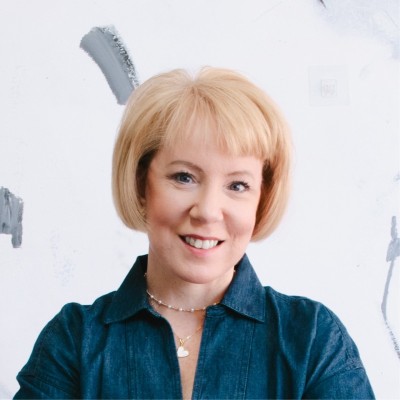
Practice Manager, Dr. W. Matthew White
For more than 20 years, Steffanie has worked with physician, office and surgical center staff to improve efficiency, practice profitability, staff retention and patient care. She specializes in helping practices find ways through both day-to-day operations as well as long-term strategic planning to maximize revenue without compromising patient care or satisfaction.